Notifier Smoke Detector Parts: Complete Guide
Overview
Notifier smoke detector parts are a cornerstone in maintaining the reliability and functionality of fire alarm systems across various facilities. As a leading brand in the fire safety industry, Notifier provides a comprehensive selection of components that ensure compliance with stringent standards such as UL 268 and FM. This guide will delve into the critical aspects of these parts, offering insights into their roles within a fire alarm system, including protocols like CLIP and IDNET, and wiring classes such as Class A and B.Key Components of Notifier Smoke Detectors
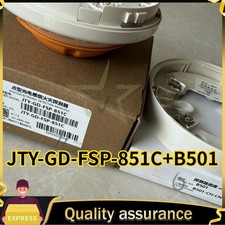
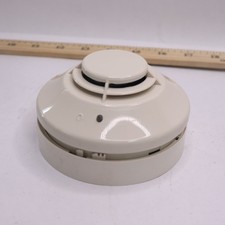
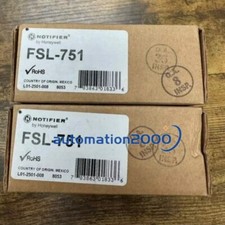
Notifier smoke detectors comprise several pivotal components that contribute to their effectiveness. Among these are the sensing chambers, electronic circuitry, and communication modules. The sensing chamber, typically equipped with photoelectric or ionization technology, is responsible for detecting smoke particles. The electronic circuitry processes signals and interfaces with the fire alarm control panel.| Component | Function | Specifications |
|---|---|---|
| Sensing Chamber | Detects smoke particles | Photoelectric/ionization, UL 268 compliant |
| Communication Module | Transmits signals to control panel | IDNET, CLIP protocol compatible |
| Power Supply | Provides operational power | 12V, supports backup battery |
Regularly check the sensitivity of the sensing chamber to ensure it meets the required detection thresholds. Calibration tools are available for precise adjustments.
Protocols and Wiring
The integration of Notifier smoke detectors into a fire alarm system involves understanding their communication protocols and wiring classes. Notifier utilizes advanced protocols like CLIP (Classic Loop Interface Protocol) and IDNET, which are essential for seamless communication between devices and control panels. These protocols support features such as device addressing and status monitoring, crucial for rapid response in emergency scenarios. When it comes to wiring, Notifier systems can be configured using Class A or Class B circuits. Class A wiring provides a redundant path for signals, enhancing system reliability in case of wire breakage. In contrast, Class B is simpler but lacks redundancy.When installing Notifier smoke detectors, always verify the compatibility of the communication protocol with your existing fire alarm control panel. This ensures optimal performance and system integration.
Maintenance and Troubleshooting
Maintaining Notifier smoke detector parts is critical for ensuring their long-term operational efficacy. Regular cleaning of the sensing chamber and checking for firmware updates are essential maintenance tasks. Additionally, components such as the Fire-Lite MS-5210UD / Notifier SFP-1024 Replacement Board *For Parts* *AS IS* may require inspection for wear and tear. Troubleshooting involves addressing common issues like false alarms, which can often be mitigated by ensuring that the detectors are free from dust and obstructions. Additionally, ensuring that power supplies, such as the Mighty Max 12V 18Ah Replaces Notifier FireWarden-50 Control Panel + 12V Panel, are fully functional is vital for uninterrupted operation.FAQs
Notifier smoke detectors support protocols such as CLIP and IDNET, enabling efficient communication with control panels.
Class A wiring provides a redundant signal path, increasing system reliability, while Class B is more straightforward but lacks redundancy.
Regular cleaning of the sensing chamber and software updates are necessary to maintain detector functionality.
Protocol compatibility ensures that smoke detectors and control panels communicate effectively, which is crucial for timely alerts and responses.
Find These Parts on FirePartsHub
Browse our verified inventory of Notifier components sourced from trusted eBay sellers: